
Operational flow
Gates, patios, back areas, warehouses and berths coordinated with less friction.
Connected, secure and efficient operations
Engineering and integration for ports, terminals, bonded facilities and operations that depend on continuous availability.
ConsulData works alongside the port community in developing projects, implementing critical infrastructure and modernizing operations.
Engineering, technology, logistics and regulatory compliance are handled together so that the solution considers the flows, restrictions and availability required by the terminal.

Technology needs to track loads, people, vehicles, equipment and evidence without creating new silos.
Gates, patios, back areas, warehouses and berths coordinated with less friction.
Prepared controls and evidence for applicable customs and security requirements.
IT infrastructure designed for an operation that cannot stop.
Events, assets and operational conditions brought together to support decision and response.
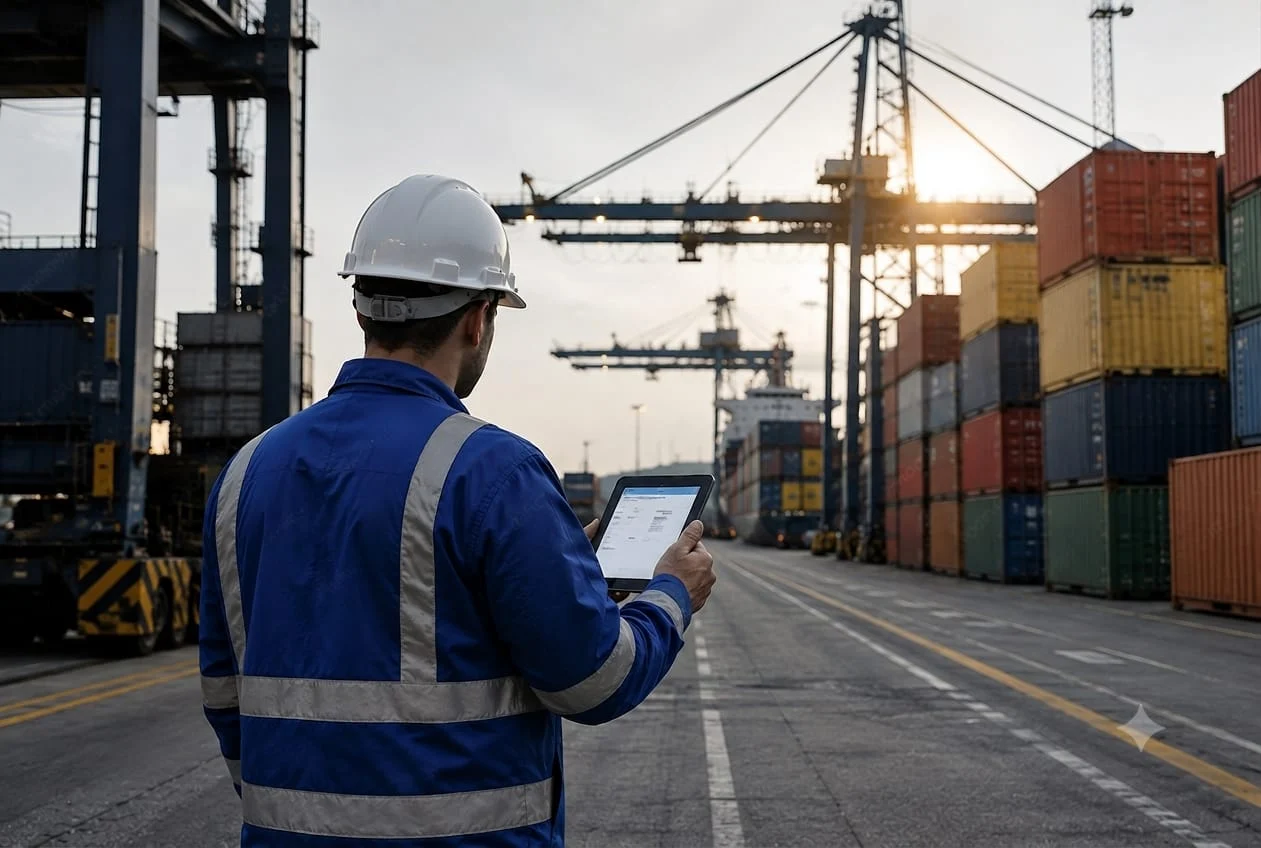
Modern ports require permanent availability, productivity and adaptation to the new demands of international logistics.
Artificial Intelligence, computer vision, IoT, LTE and 5G private networks, automation, drones, radars, analytics and digital platforms need to coexist with operational and regulatory requirements.
A port architecture connects the field to systems and transforms events into an operational context.
Trucks, people, cargo and equipment
OCR, RFID, sensors, cameras and automation
Fiber, industrial networks, Wi-Fi, LTE and 5G
TOS, ERP, VMS and operational platforms
Control Centers, alerts and evidence
Operations more connected, secure and prepared to evolve.
Our experience was built within port operations, through participation in projects involving the implementation of new terminals, the modernization of existing infrastructure, and the development of solutions to increase operational efficiency.
Over more than three decades, ConsulData has participated in the implementation and modernization of ports, port terminals, and bonded facilities throughout Brazil, accumulating deep knowledge of the technical, operational, and regulatory requirements applicable to the sector.
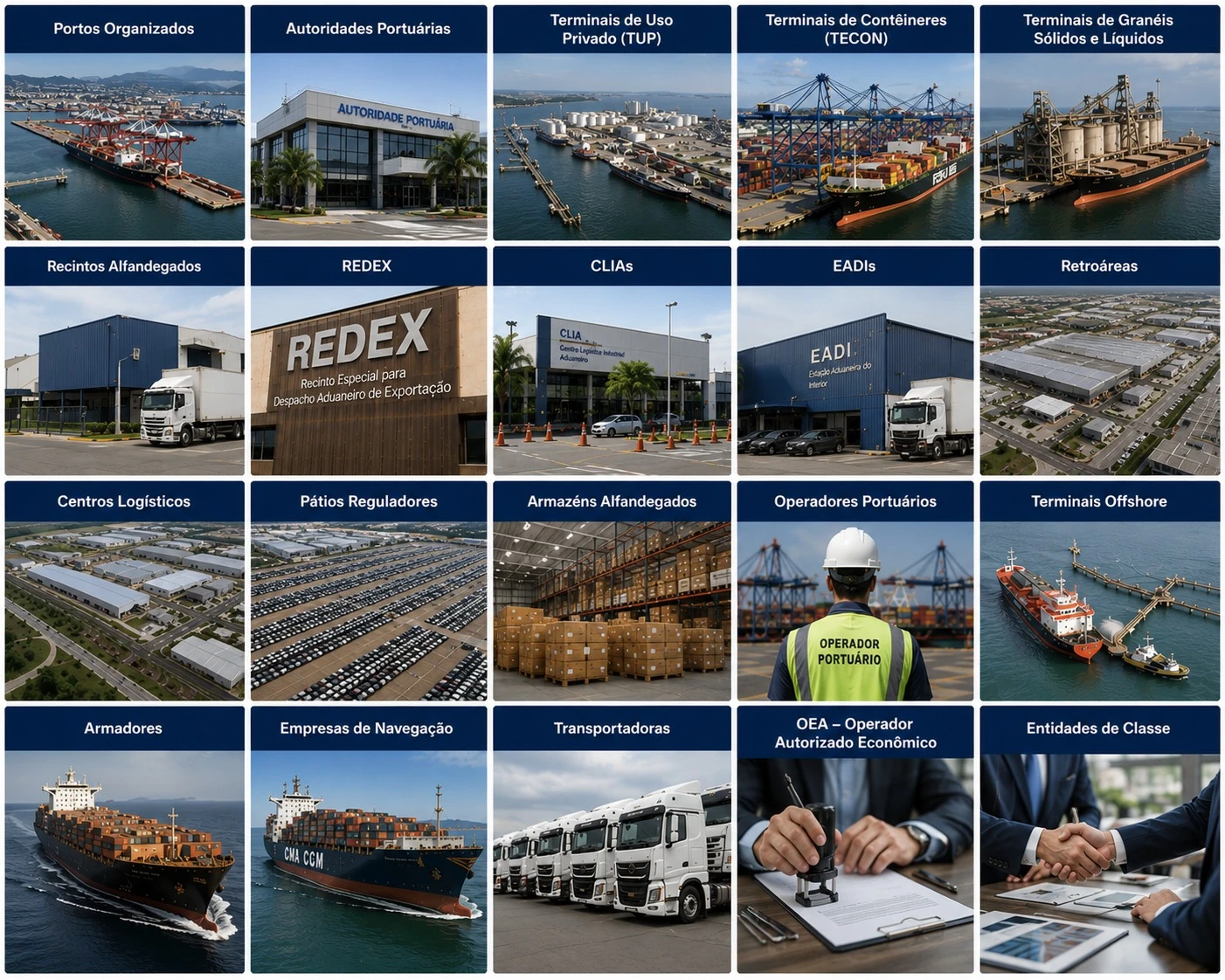
Our team provides specialized consulting for the implementation, expansion, and modernization of Organized Ports, Private Use Terminals (TUPs), REDEX, CLIAs, EADIs, CECOMs, Logistics Centers, and other facilities subject to customs control, supporting clients from feasibility studies through the facility's operational launch.

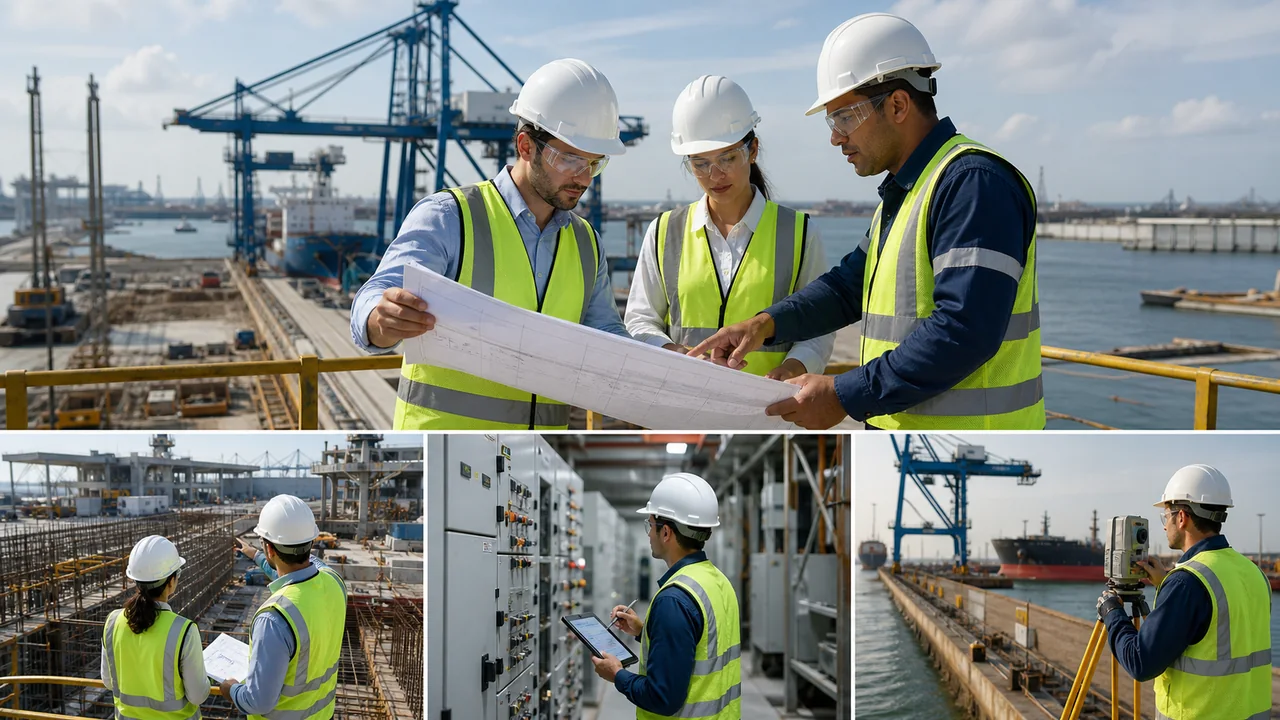
Few sectors have a regulatory burden as high as the port environment. In addition to operational challenges, projects must meet strict security, availability, traceability, and compliance requirements established by different regulatory authorities.
ConsulData has extensive experience designing and implementing projects aligned with the requirements of the Brazilian Federal Revenue Service (RFB), the General Coordination for Customs Administration (COANA), CONPORTOS, the ISPS Code, as well as ordinances, regulatory acts, and other requirements applicable to bonded facilities and port installations.
This knowledge reduces risks during project implementation, facilitates inspection processes, and helps our clients keep their environments continuously aligned with legal and operational requirements.
From feasibility through ongoing support, the operational context remains central at every stage.
Feasibility studies, consultancy and technological planning.
Coordinated conceptual, basic, and detailed designs.
Construction supervision and implementation management.
Commissioning, As-Built documentation and assisted operation.
Maintenance and support defined according to contract.
ConsulData contributes to the technological evolution of Brazil's port sector, supporting the modernization of critical infrastructure and the digital transformation of operations.
Our experience includes projects involving data communications, automation, customs control, OCR for vehicle and container identification, Control Centers, Data Centers, high-availability connectivity, intelligent video surveillance, industrial networks, RFID, IoT, Artificial Intelligence, and private LTE and 5G networks.
This track record includes initiatives such as the communications infrastructure for ABTRA's DT-E, the Customs Surveillance Operations Center (COV) of the Brazilian Federal Revenue Service in Santos, and PTT/PIX Santos, as well as technology modernization projects at terminals across different regions of Brazil.
We are now advancing to a new stage: building semi-autonomous and autonomous terminals. The integration of connectivity, automation, artificial intelligence, sensors, computer vision, and command-and-control systems will enable increasingly intelligent, secure, efficient, and independent operations.
The future of ports is being built now, and we want to build it together with our clients and partners.
Share the flows, risks and objectives of the operation with our engineering.